Thucydides, Tehran, and the Temptation of a Quick Settlement
- by:
- 2026-05-29
- Source:
patriotuncensored.com

- 05/29/2026
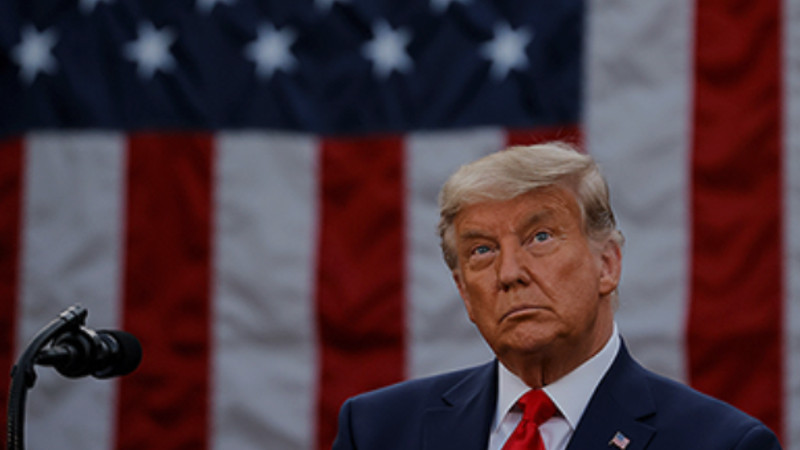
Donald Trump by Unknown is licensed under CSPAN
In the seventh year of the Peloponnesian War, Athens found itself holding a position of unexpected strength. Its navy was dominant, its treasury sufficient, its enemies fractured. Sparta, exhausted and humiliated by losses at Sphacteria, sent envoys seeking terms. The peace was theirs to dictate.
They threw it away.
Thucydides records the failure with his characteristic restraint — not as the tragedy of miscalculation, but as the tragedy of moral and strategic confusion. Athens could not distinguish between the moment of victory and the fruit of victory. It could not bring itself to ask the simple question: What did we fight for, and does this settlement secure it? Within a decade, the Athenian empire was shattered at Syracuse, and a generation of young men was gone.
The parallel is not perfect — no historical analogy ever is — but it is instructive enough to demand attention as American negotiators in the spring of 2026 draft a memorandum of understanding that would, by most accounts, revert the status of negotiations with Iran to where they stood on February 27, when the guns had barely cooled and the Ayatollah's proxies were still recalibrating after months of devastating American and Israeli strikes.
The United States, by any honest accounting, has won this war. Not in the decisive, unconditional sense of 1945, but in the substantial sense that matters for statecraft: Iran's nuclear sites have been set back by years, its missile infrastructure has been struck repeatedly, its terror proxies degraded, and its regime leadership shaken. The Strait of Hormuz, which Iran closed in an act of economic warfare against the entire industrialized world, has disrupted global oil markets and forced countries from India to Europe to seek alternative supply chains, a disruption that falls heavily on Tehran's capacity to fund future aggression.
Treasury Secretary Scott Bessent, filling in for the White House press secretary on Thursday, told reporters that President Trump will not take a bad deal on Iran. That is a reassuring statement. But reassuring statements and sound agreements are not the same thing, and the distance between them is often measured in what negotiators are willing to leave on the table.
What must not be left on the table — what cannot be sacrificed for the appeal of a signed document and a Rose Garden ceremony — is the physical infrastructure of Iranian nuclear capability. Israeli Ambassador to the United States Michael Leiter made the technical reality plain this week: Iran retains approximately 1,700 centrifuges capable of producing enriched material in a very short time frame. Those centrifuges, Leiter said, must be dismantled or removed entirely. Not capped. Not inspected. Dismantled.
Representative Pat Fallon of Texas, speaking on Thursday, framed the minimum acceptable terms with admirable clarity: no enriched uranium, a reopened Strait of Hormuz, and a formal Iranian commitment to cease exporting terrorism and ballistic missile technology. These are not maximalist demands. They are the logical definition of what victory requires if it is to mean anything at all.
And yet the draft framework being considered, if reports are accurate, would essentially restore the diplomatic status quo ante of late February. The critics — and there are serious ones on both sides of the aisle — fear that what is being traded for this settlement is the very leverage that four months of sustained military effort purchased at great cost.
Senator Seth Moulton of Massachusetts, hardly a voice for conservative foreign policy, called the emerging framework "a surrender document" and suggested that the United States appears to be negotiating "America's unconditional surrender to Iran." One need not agree with Moulton's characterization in full to acknowledge that his language — coming from a Democrat, a veteran, and no natural ally of the president — should at least prompt a pause.
Tocqueville, writing of democratic republics in the nineteenth century, worried that they were constitutionally ill-suited for the long discipline of foreign policy. They tend, he observed, toward emotional excess in adversity and premature exuberance in apparent triumph. They tire quickly of sacrifice and become susceptible to the counsel of those who promise a resolution, any resolution, that allows domestic attention to return to domestic affairs.
The current moment fits that pattern with uncomfortable precision.
After four months of war, the American public is understandably exhausted. Gas prices, disrupted by the Hormuz closure, have only recently begun to fall — $4.39 per gallon as of Friday, still nearly a dollar above where they were before the conflict escalated. Supply chains have strained. The political cost of the war at home is real, and any president would be sensitive to it.
But the Founders understood something that democratic sentiment tends to obscure: the purpose of military power is not the act of fighting but the security that lasting settlement produces. The Federalist Papers, particularly Hamilton's arguments in No. 70 and No. 74, anticipate precisely this tension — the need for executive energy in foreign affairs, the danger of popular impatience subverting durable security arrangements.
What would a durable settlement with Iran require? Not perfection. Not the conversion of the regime to Western liberalism. Not even the remaking of the Middle East in a form congenial to American interests. It would require, at minimum, the permanent removal of Iran's ability to produce a nuclear weapon within a short timeline, the formal end of its practice of funding and arming proxy terror networks throughout the region, and the unambiguous reopening of international shipping lanes.
Anything short of this does not end the threat. It defers it.
The greatest danger in the coming weeks is not that Trump will negotiate poorly. He has demonstrated, in this and other contexts, a capacity for pressure and resolve that his critics habitually underestimate. The danger is the institutional pull — from diplomatic establishments, from international partners eager for stability, from advisors exhausted by conflict — toward a settlement that can be announced as peace but functions as postponement.
Athens made that mistake. Rome, in its later centuries, made it repeatedly, trading buffer provinces and tribute payments for intervals of calm that only emboldened the next incursion. The permanent things — the defense of civilization's outermost perimeter against forces that seek not negotiation but dominance — do not bend to the convenience of election calendars or the impatience of a news cycle.
The president's instincts, by most accounts, are sound. Bessent's assurance that no bad deal will be accepted is encouraging. But instincts must be institutionalized into specific, verifiable, non-negotiable terms before the signing ceremony, not after.
The hour of maximum leverage is now. What is done with it will echo far longer than any press release
Donald Trump by Unknown is licensed under CSPAN
