
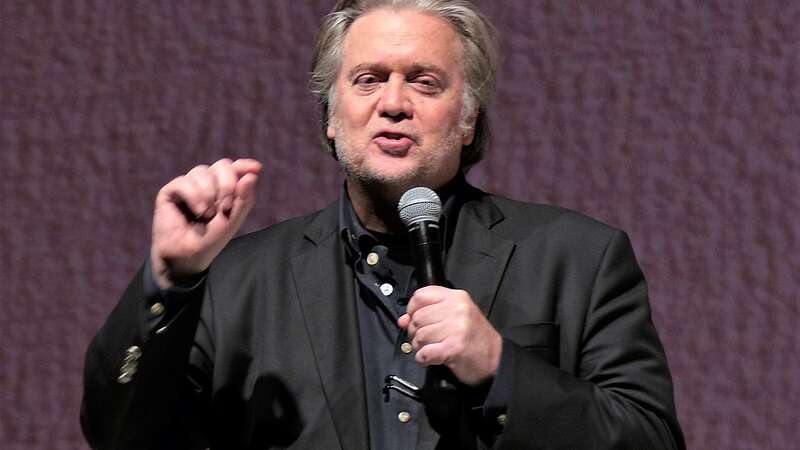
The Supreme Court on Monday vacated a lower court ruling that had upheld Steve Bannon's contempt of Congress conviction and returned the case to the trial court level, directing it to consider the Justice Department's pending motion to dismiss the indictment.
The decision removes the appellate underpinning of Bannon's conviction without formally ending it, leaving the question of dismissal to the district court. Legal analysts say the posture strongly favors the government's own motion to drop the case.
Bannon, 72, was convicted in July 2022 on two counts of contempt of Congress after refusing to comply with subpoenas from the House Select Committee on January 6. The committee had sought both documents and testimony from Bannon in connection with its investigation of events surrounding the Capitol on January 6, 2021. Bannon declined to appear, asserting claims of executive privilege — a position federal courts rejected, noting that Bannon had departed his White House post in August 2017, years before the events under investigation.
He was sentenced to four months in federal prison. After multiple unsuccessful attempts to remain free pending appeal — including a Supreme Court denial of that request — Bannon reported to a federal correctional institution in July 2024.
The legal landscape shifted after President Trump's return to office. The Trump Justice Department filed a motion to dismiss the Bannon case, characterizing the prosecution as an abuse of the congressional contempt statute. That motion remained pending in the lower courts while the appellate process continued.
Monday's Supreme Court action clears the principal procedural obstacle to granting that motion. By vacating the ruling that had affirmed the conviction and specifically directing the lower court to reconsider in light of the DOJ's dismissal motion, the justices created a direct path for the trial court to end the prosecution.
The contempt of Congress statute under which Bannon was charged, 2 U.S.C. § 192, makes it a misdemeanor for a witness to defy a congressional subpoena. Convictions under the statute have been historically rare and have required active prosecutorial support from the Justice Department — support the current administration has withdrawn.
Bannon is one of multiple figures prosecuted under the January 6 committee's contempt referrals. Former trade adviser Peter Navarro was also convicted of contempt and served a four-month sentence in 2024. His case is separately under review by the current DOJ. Former White House Chief of Staff Mark Meadows was referred for contempt but was not charged.
Critics of the dismissal motion have argued that allowing the executive branch to retroactively abandon contempt convictions obtained by a prior administration would weaken Congress's future ability to compel testimony from reluctant witnesses. "If the executive can simply erase a contempt conviction when the political winds change, the subpoena power becomes a paper tiger," one legal scholar told congressional staff during a briefing earlier this year.
Supporters of the dismissal counter that the Bannon prosecution was legally flawed from the outset — that the committee's subpoena exceeded the scope of its authorized investigative mandate and that executive privilege questions were never adequately resolved before charges were filed.
The district court has not yet scheduled a hearing on the dismissal motion. The timeline for that proceeding is expected to accelerate following Monday's Supreme Court ruling.
Whether the court grants the motion is likely to generate its own appellate review, given the constitutional questions about the scope of congressional investigative authority and the executive branch's power to terminate prosecutions initiated by a prior administration.
If the dismissal is ultimately granted, it would effectively close one of the most visible accountability prosecutions arising from the January 6 committee's work — and extend the Trump administration's broader effort to undo what it has characterized as politically motivated prosecutions conducted between 2021 and 2025.
The next scheduled proceeding in the case has not yet been announced.

