Fire on the Water: Thucydides, the Hormuz Strait, and America's Test of Will
- by:
- 2026-07-13
- Source:
patriotuncensored.com

- 07/15/2026
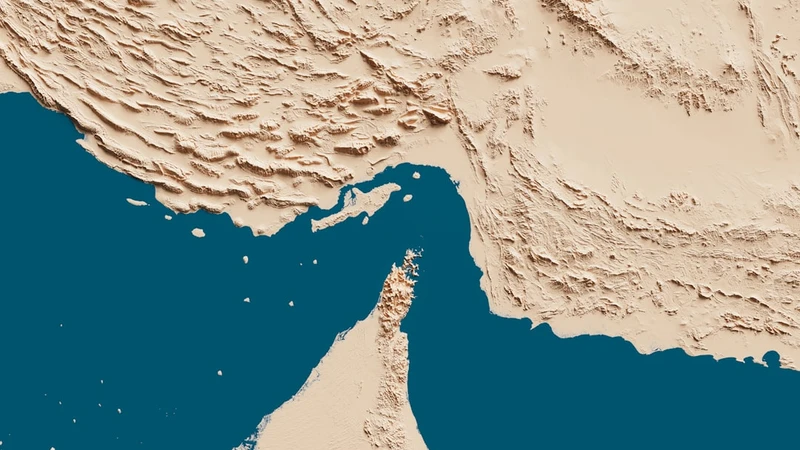
Strait of Hormuz - youtube.com/@planetvolumes by Planet Volumes is licensed under Unsplash unsplash.com
Thucydides, writing of the protracted struggle between Athens and Sparta in the fifth century before Christ, observed that nations go to war not for the stated reasons of justice or grievance, but because of fear, honor, and interest — and that of the three, fear drives most consequentially. The Spartans did not fear the Athenians because Athens was militarily superior in the open field. They feared what Athens was becoming: a maritime empire that had seized control of the arteries of Greek commerce, and whose ambitions showed no principled limit.
We would do well to recall Thucydides this week as the United States military fights for control of the Strait of Hormuz.
The strait is twenty-one miles at its narrowest navigable passage. Through it flows approximately twenty percent of the world's traded oil — petroleum that heats European homes, powers Asian manufacturing, and moves goods across a connected global economy that has no practical alternative route at comparable cost. It is the single most consequential geographic chokepoint on earth. When it closes, or when credible threats cause tankers to divert and insurers to withdraw, the price signal radiates across every economy that depends on the movement of fossil energy. That is to say: every economy on earth.
Iran has understood this arithmetic for decades. The Ayatollahs have calculated — not incorrectly — that the ability to threaten the strait purchases strategic leverage wildly disproportionate to Iran's actual military and economic capabilities. A nation of eighty-five million people, economically isolated and technologically constrained by a generation of sanctions, nonetheless holds the global economy at intermittent gunpoint by positioning missiles, naval assets, and proxy forces along its southern coastline. This is not the strategy of a great power. It is the strategy of a cornered adversary that has studied the map and identified the single pressure point at which the world reliably flinches.
On Sunday and into Monday, Iran demonstrated that it is not bluffing.
Missile and drone strikes hit Oman, Bahrain, Jordan, and Kuwait. Iranian forces again asserted sole control of the Strait of Hormuz. United States Central Command responded with retaliatory strikes Sunday, and by Monday morning, the Trump administration announced the reinstatement of the full Iranian naval blockade. "The Hormuz Strait is OPEN, and will remain OPEN, with or without Iran," the President declared. "We are reinstating THE IRANIAN BLOCKADE."
And in what military historians will note as a meaningful threshold, the United States used Corsair unmanned surface vessels — one-way attack surface drones — against Iranian targets for the first time in combat. Three such vessels struck a submarine and ship maintenance facility at the port of Bandar Abbas Naval Base, according to U.S. Central Command. First use of a weapons system in combat carries a particular weight. It signals not only capability but commitment. A weapon deployed is a doctrine in motion.
Consider what this moment demands of the American character.
The Founders were not naive about the necessity of force. They had fought a revolution. Many had served under fire. James Madison, in Federalist No. 41, wrote that the Constitution must provide for the common defense not because men are angels, but precisely because they are not. The capacity to project force was, for them, not an imperial ambition but a moral obligation — the guarantor of the conditions under which free commerce, free worship, and self-governance could persist against those who would destroy them.
What the United States is defending at the Strait of Hormuz is not merely oil, though disruption of that waterway would inflict real suffering on ordinary people across the industrial world. What is being defended is the principle that the international commons — the sea lanes, the straits, the airways through which civilization conducts its daily business — cannot be held hostage by revolutionary regimes that have explicitly dedicated themselves to the undoing of the existing order. The Ayatollahs do not merely oppose American foreign policy at the margins. They oppose, in their own stated terms, the Western foundations upon which post-war order rests. Their grievance is not with a particular treaty or tariff. It is with the civilization that produced the treaty and the tariff.
Tocqueville, visiting America in the 1830s, marveled at the unusual capacity of democratic peoples to sustain effort in the service of a national idea. He also identified their characteristic weakness: the tendency of commercial democracies to prefer comfortable arrangement over hard resolution, to negotiate when action is required, to defer to the optimism of the next quarter rather than confront the logic of the long adversary. "There is, indeed," Tocqueville wrote, "a most dangerous tendency in the human mind to sacrifice the future to the present." Commercial republics are especially susceptible because prosperity tempts them to believe that every adversary has a price, that every revolutionary grievance conceals a negotiating position.
The temptation in the current moment is precisely Tocquevillian. Eleven-hour negotiations — the President's own frustrated description of Sunday's talks. Meetings that produce no resolution but buy time for an adversary that needs time to reconstitute and re-arm. Revolutionary regimes do not negotiate in good faith across a table; they negotiate at the table to avoid worse consequences while preparing for the next provocation. This is not a moral judgment. It is a strategic observation history supports without exception, from the appeasement at Munich in 1938 to the nuclear framework of 2015 that the Ayatollahs treated as a ceiling rather than a floor.
The United Kingdom this week moved to formally designate the Islamic Revolutionary Guard Corps as a terrorist organization — bringing Britain into alignment with the United States and European Union on the legal characterization of Iran's primary instrument of external power projection. This is not a symbolic gesture. Designation has real consequences for the financing, travel, and legal standing of IRGC-linked entities in British jurisdictions. It represents a hardening of the Western coalition at precisely the moment when coherence is required.
What does this moment demand of those who hold to the permanent things?
The natural law tradition, which animated the American Founders and which underlies the moral architecture of Western civilization, holds that the defense of ordered society against those who would destroy it is not merely permitted but obligatory. The Iranian regime — which executes its own citizens for apostasy, which arms proxy forces from Beirut to Sanaa to Baghdad, which has declared the elimination of Israel a sacred national objective — does not represent an aggrieved party seeking redress under the terms of that tradition. It represents a revolutionary force committed to the undoing of the order that makes civilized life possible in the first place.
Augustine, in The City of God, distinguished between the just war waged to restore peace and the unjust aggression waged for pride or gain. The Corsair drones that struck Bandar Abbas Naval Base on Monday were employed in the service of the first category: to preserve the navigable commons upon which peaceful commerce depends, against a regime that had attacked civilian shipping and the sovereign territory of neighboring nations.
The technology is of this century. The question it answers is as old as civilization itself: when an adversary threatens the arteries of commerce and the foundations of order, will the inheritors of the Western tradition hold the line?
Thucydides understood that democracies falter not because they lack the means to defend themselves, but because they lose the will. The Athenians, at the height of their power, made catastrophic strategic errors not from weakness but from the refusal to honestly assess both their own limitations and the resolve of their adversaries. The lesson of Melos, of Sicily, of the long agony of the Peloponnesian War is not that Athens was weak. It is that strength, undisciplined by honest reckoning, becomes its own form of vulnerability.
The test at the Strait of Hormuz is simpler than Athenian hubris. It is a test of clarity — about what the republic is defending, why it matters, and whether the American people retain the will to see it through.
The drones have already answered one part of that question. The negotiating table has not yet answered the other.
Strait of Hormuz - youtube.com/@planetvolumes by Planet Volumes is licensed under Unsplash unsplash.com
